Reaction Time Statistics: World Records, Averages, and What Your Score Actually Means
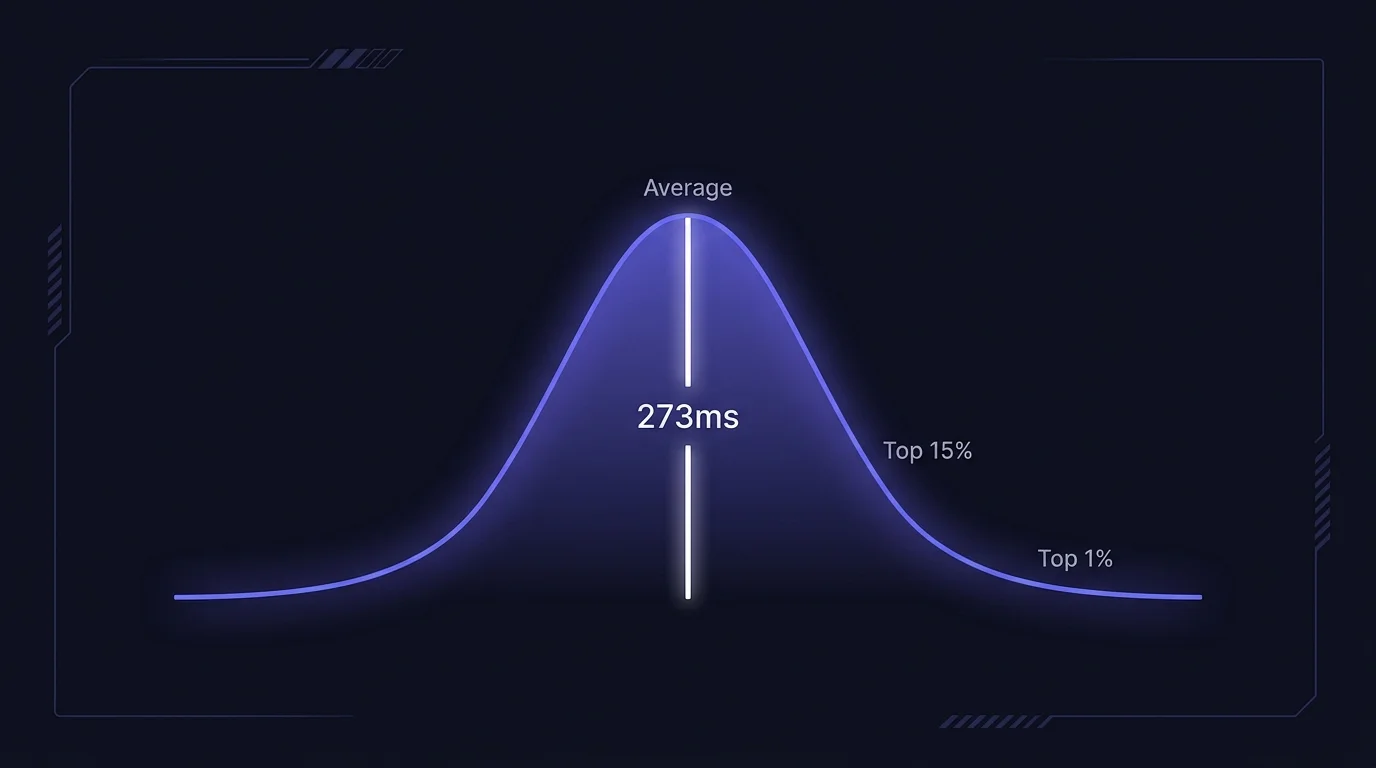
The fastest reaction time ever recorded in a controlled test is around 100ms. Your brain physically cannot go faster. Most people reading this are somewhere between 150ms and 350ms. Here is exactly where you stand.
What Is the Average Human Reaction Time?
Over 81 million reaction time tests on humanbenchmark show a median of 273ms and an average of 284ms. That is where the average human actually lands, not the 200ms most people assume. If you scored 250ms on a browser test, you beat over half the people who have ever taken it.
There is one important thing every test hides from you: your display and input devices add roughly 30ms to every score you see. A 284ms result means your actual biological reaction time is closer to 254ms. No browser-based test shows you your real number. Here is how scores actually break down:
| Score | What it means |
|---|---|
| Under 150ms | Physically impossible without anticipation |
| 150-200ms | Elite. Pro gamer territory |
| 200-250ms | Excellent. Faster than 75% of people |
| 250-300ms | Average. Completely normal |
| 300-350ms | Below average but improvable |
| 350ms+ | Slow. Sleep, caffeine, and practice help |
Take the reaction time test before reading further. This table means a lot more once you have your own number to compare.
Reaction Time World Records
The fastest reliably recorded human reaction times in controlled lab conditions sit around 100-120ms. That is not a score you can train to. At that level, you are approaching the physical limit of how fast nerve signals travel from your eyes to your brain to your hands.
In competition, the numbers are more grounded. F1 drivers average around 200ms in race conditions, reacting to lights on a starting gantry. Pro FPS players in CS2 and Valorant consistently land between 150-180ms. Untrained adults who have never practiced land between 250-270ms. Here is how those groups compare:
| Player type | Typical reaction time |
|---|---|
| Untrained adult | 250-270ms |
| Casual gamer | 220-250ms |
| Competitive gamer | 180-220ms |
| Pro FPS player | 150-180ms |
| F1 driver | 180-200ms |
The searches for "fastest reaction time in the world" almost always want the same answer: can a human actually hit 100ms? In a clean controlled test with no anticipation, barely. Most scores under 150ms involve anticipating the signal. For how reaction time shifts across your lifespan, the average reaction time by age breakdown has the full picture.
For a full breakdown of what each score means, see what counts as a good reaction time.
What Affects Your Reaction Time?
A few things move your reaction time more than most people expect. In order of how much they actually matter:
- Age is the biggest long-term factor. PubMed research on reaction time confirms reaction time peaks between 18 and 24, then declines steadily. By your 30s the decline has started, even if you cannot feel it yet.
- Sleep deprivation adds 30-50ms to your reaction time. If you tested after a bad night, your score is not your real score. Test again after a full night of sleep.
- Your monitor refresh rate contributes directly to your score. A 144Hz display updates 7ms faster than a 60Hz one. That 7ms is baked into your test result every time you sit at a slower monitor.
- Consistent practice over several weeks lowers your baseline. The improvement is not dramatic, but it is measurable and it sticks.
Frequently Asked Questions
What is the average reaction time for a human?
Based on data from over 81 million tests on humanbenchmark, the median reaction time is 273ms and the average is 284ms. This includes roughly 30ms of display and input latency, so your actual biological reaction time is about 250ms on average.
Where can I find reaction time score benchmarks?
For a full score breakdown by tier, see our what is a good reaction time guide.
What is the reaction time world record?
In controlled laboratory conditions the fastest reliably recorded human reaction times are around 100-120ms. In competitive gaming, scores below 150ms on browser tests are extremely rare and often involve some anticipation rather than pure reaction.
Is 300ms reaction time bad?
300ms is slightly below the average of 273ms but completely normal. Most people over 40 score in this range. Sleep deprivation, using a 60Hz monitor, and not being warmed up all push scores higher. Test again after a good night's sleep and you will likely improve.
Can reaction time be improved?
Yes. For a full training protocol see our how to improve reaction time guide.
Now you have the context. A number on its own means nothing. A number you can compare to 81 million other people means something. Go find out where you actually stand.
Free, no signup, results in seconds.
Take the Reaction Time Test