Whack-a-Mole
Classic reaction speed game
Whack-a-Mole is the classic arcade reaction game adapted for the browser. Moles pop up at random positions and you must click them before they disappear. It tests your reaction speed, target tracking, and hand-eye coordination.
How to Use
- 1Click Start to begin the game
- 2Click each mole as it appears before it retreats
- 3Moles appear faster as your score increases
- 4Your final score is the number of moles successfully whacked
From Carnival Cabinet to Brain Trainer
The original Whac-A-Mole was a physical arcade machine built in the mid-1970s, with motorized moles and a foam mallet. The reason the format survived fifty years is that it accidentally became a near-perfect cognitive task: unpredictable spatial targets under time pressure, exactly the structure researchers use to study divided attention.
The browser version trades the mallet for a cursor, which actually makes it harder. A mallet swing is one gross motor action. Precise cursor movement to a small on-screen target demands fine motor control on top of the raw reaction, which is why your first rounds feel clumsier than the arcade ever did.
The game even donated an idiom to the language: "playing whack-a-mole" now describes any problem that pops up somewhere new every time you knock it down. Fifty years on, the format still earns its keep as both a saying and a genuinely useful reflex drill.
Score Bands and What Limits You
| Moles Hit | Band | Usual Bottleneck |
|---|---|---|
| Under 15 | Warming up | Reacting to each mole individually |
| 15-25 | Beginner | Cursor travel time across the board |
| 25-45 | Experienced | Recovery speed after each click |
| 45+ | Elite | Sustained attention as spawn rate climbs |
If your misses cluster on the edges of the board, you are staring at the center instead of letting peripheral vision do the spotting.
The Edge Trick: Stop Staring at the Center
The single biggest score jump in this game comes from where you point your eyes, not how fast your hand is. Beginners lock their gaze on the middle and chase each mole with a hard, direct look, which means every target near the edge costs an extra eye movement before the hand can even start. Strong players soften their focus on the center and let peripheral vision flag the movement anywhere on the board.
This is a trainable advantage with real evidence behind it. Research by Green and Bavelier found that action-game players develop a wider useful field of view, the zone where they can detect and act on a target without moving their eyes, than people who do not play. That is exactly the skill this game rewards. Park your cursor near the center, hold a relaxed gaze, and react to the flash of motion in your periphery rather than hunting mole by mole. Your hits-per-round climb the moment you stop tunneling on one spot.
What is a Good Score?
Beginners typically score 15–25 moles per round. Experienced players reach 30–45. Scores above 50 represent sharp reaction time and good cursor tracking.
Tips to Improve
- →Keep your cursor near the center of the play area to minimise travel distance to any mole
- →Use peripheral vision to spot moles on the edges — do not stare at one spot
- →Click the moment you see movement rather than waiting to identify the full mole
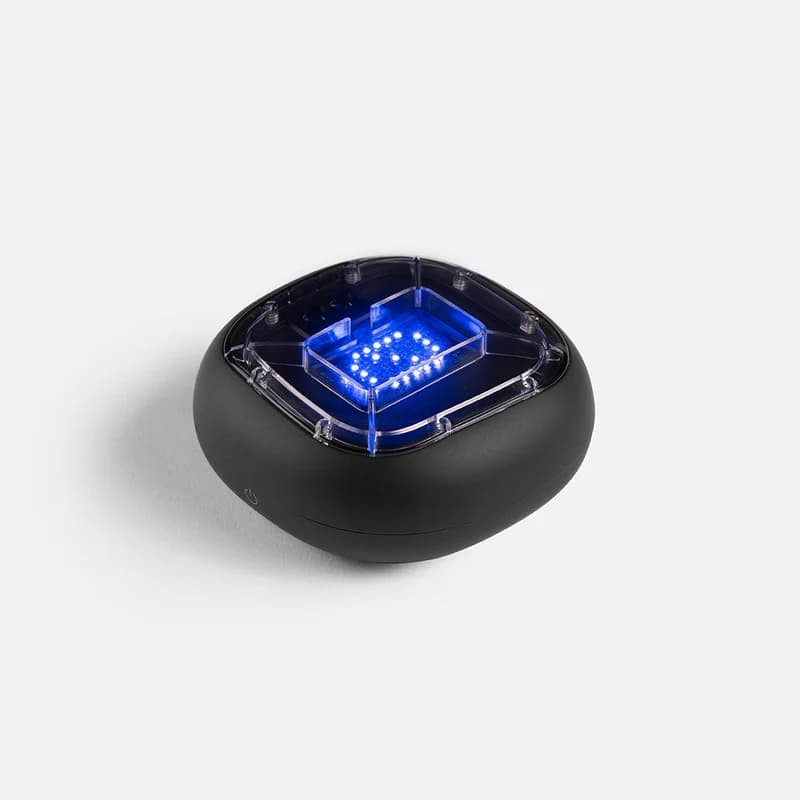
Physical training with A-Champs ROX sensors develops reaction speed faster than screen-only drills. Affiliate link — we may earn a commission at no extra cost to you.
Frequently Asked Questions
What skills does Whack-a-Mole test?
Whack-a-Mole primarily tests visual reaction time, peripheral awareness, and cursor control accuracy — all of which transfer directly to gaming and sports performance.
Is Whack-a-Mole good for reaction time training?
Yes. Repeatedly clicking unpredictable targets trains your visual processing speed and cursor control in a way that is more game-like than a simple reaction time test. Studies on action video games show that random-target tasks improve attentional deployment and response speed.
How does difficulty increase in Whack-a-Mole?
Moles appear for shorter durations and at faster intervals as your score increases. Later rounds also reduce the pause between moles, requiring sustained high-speed reactions rather than occasional quick responses.
What is a good Whack-a-Mole score?
For a standard round, 25–35 successful hits is solid performance. Above 45 indicates fast reflexes and good peripheral awareness. Top players consistently score 50+ by maintaining central focus and using peripheral detection rather than tracking each mole individually.
One round takes under a minute. See which band you fall into before the moles speed up on you.
Also Try
Built and maintained by Abdul Shakoor. Every test runs locally in your browser, free with no signup.