EnChroma Color Blind Test: How It Works and How Accurate Is It?
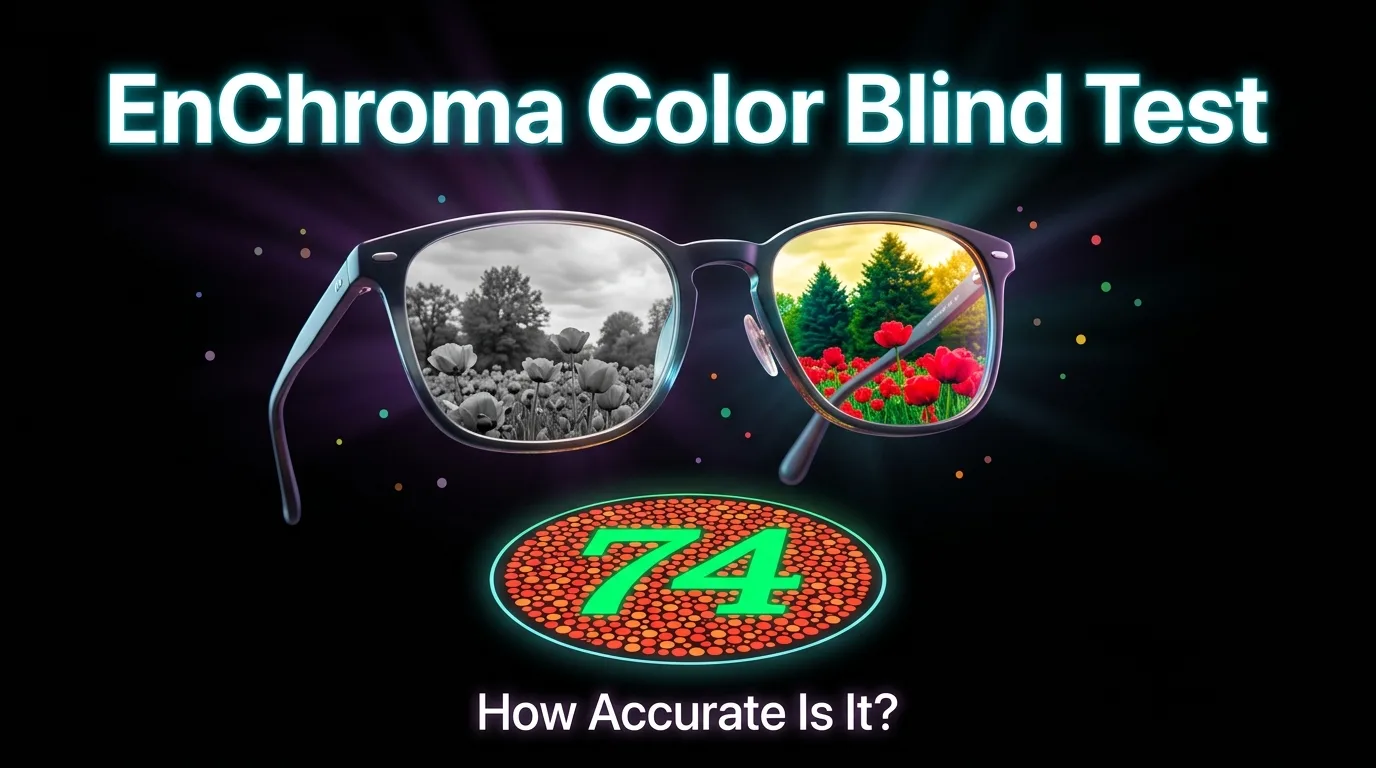
EnChroma is a glasses brand that offers a free online color blind test on their website. The test is based on the Ishihara method and takes about 2 minutes. It is designed to identify color vision deficiency and suggest whether EnChroma glasses might help. It is not a clinical diagnostic tool but works well as a quick free initial screening.
What Is the EnChroma Color Blind Test?
EnChroma is a company known for making color blind glasses. They also offer a free online test on their site. It serves two purposes: it genuinely helps people identify color vision issues, and it helps EnChroma identify potential customers for their products.
The test uses Ishihara-style colored dot plates. You look at circular images packed with dots and try to identify a number or shape hidden inside the pattern. People with red-green color vision deficiency will see a different number than expected, or nothing at all.
It takes about 2 minutes and requires no account. You can also take a free color blind test on ToolsBracker without visiting the EnChroma site. For a full breakdown of all color blind test types including Ishihara, Farnsworth-Munsell, and the anomaloscope, read our color blind test guide.
How Accurate Is the EnChroma Color Blind Test?
The EnChroma test is reasonably accurate for detecting red-green color blindness. If you have moderate to severe deuteranopia or protanopia, there is a good chance the test will catch it.
It is less reliable for mild deficiency. Standard Ishihara plates, the method EnChroma uses, may only detect around 50% of all CVD cases because they were not designed to screen for blue-yellow color blindness. If tritanopia is what you have, the EnChroma test is unlikely to flag it.
Screen calibration and ambient lighting also affect how the dot plates look on your display. An uncalibrated monitor can shift the color balance enough to affect your result, which is why people testing on different devices sometimes get different readings.
For a formal diagnosis that covers all types and severity levels, you need a clinical eye exam with an optometrist. For general screening purposes, the EnChroma test is a solid free tool and a reasonable first step.
What Happens After the EnChroma Test?
If the test detects color vision deficiency, EnChroma will suggest their glasses as a next step. That is expected: they are a glasses company, and the test is partly designed to point potential customers toward their products.
EnChroma glasses use special lens filters that shift certain wavelengths of light to enhance color contrast for people with red-green CVD. They do not cure color blindness or restore missing cone function. Many users report seeing colors more vividly while wearing them, and the experience varies a lot from person to person.
Pilestone is another brand that makes similar color blind glasses at lower price points, worth researching as a comparison. Neither brand helps with blue-yellow color blindness. Tritanopia responds differently to lens filter approaches, and neither EnChroma nor Pilestone products are designed for it.
Should You Take the EnChroma Color Blind Test?
Yes, if you want a quick and free first check. It handles red-green color blindness detection reasonably well and the result comes back instantly. That is enough to decide whether a clinical exam is worth booking.
It is not a replacement for an eye exam. A clinical test covers more types of CVD, measures severity, and gives you documented results if you need them for work, school, or aviation requirements. If you already suspect you have a significant deficiency, see a specialist.
For a deeper look at all the different types of color blind tests, see our color blind test guide.
Free Alternatives to the EnChroma Test
ToolsBracker offers a free color blind test that uses the same Ishihara-based detection method. No signup required, it works on any device, and the result is instant. It covers the same red-green detection the EnChroma test targets.
It is a useful second opinion if you have already taken the EnChroma test and want to compare results on a different display. It is also a good option if you want to run a quick check without landing on a commercial site.
Frequently Asked Questions
Is the EnChroma color blind test accurate?
The EnChroma test is reasonably accurate for detecting moderate to severe red-green color blindness. It is less reliable for mild deficiency or blue-yellow CVD. For a formal diagnosis, see an optometrist.
Is the EnChroma color blind test free?
Yes, the EnChroma color blind test is completely free on their website. It takes about 2 minutes and does not require creating an account.
Do EnChroma glasses actually work?
EnChroma glasses work for many people with red-green color blindness by enhancing color contrast through special lens filters. They do not cure color blindness and do not work for everyone or for blue-yellow CVD. Manufacturers acknowledge the glasses are not designed to help people pass clinical color blind screening tests and results vary significantly between individuals.
What does the EnChroma test detect?
The EnChroma test primarily detects red-green color vision deficiency including protanopia and deuteranopia. It is less effective at detecting blue-yellow color blindness (tritanopia) or mild deficiency.
Can I take a color blind test without EnChroma?
Yes. ToolsBracker offers a free color blind test that uses the same Ishihara-based method with no signup required. Your optometrist can also perform a full clinical test for a formal diagnosis.
How long does the EnChroma color blind test take?
The EnChroma color blind test takes about 2 minutes. It shows a series of colored dot patterns and asks you to identify numbers or shapes within them.
Want to check your color vision without visiting EnChroma? Take the free Color Blind Test on ToolsBracker. No signup, instant results, works on any device.
Free, no signup, results in seconds.
Take the Color Blind Test